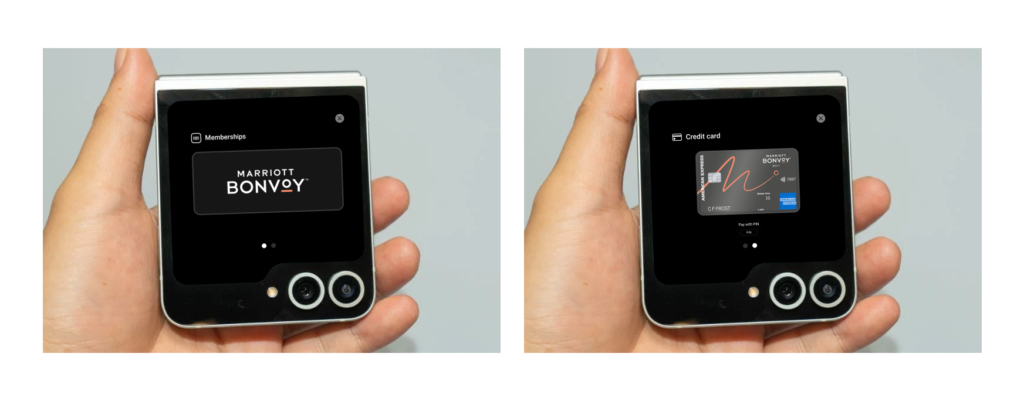
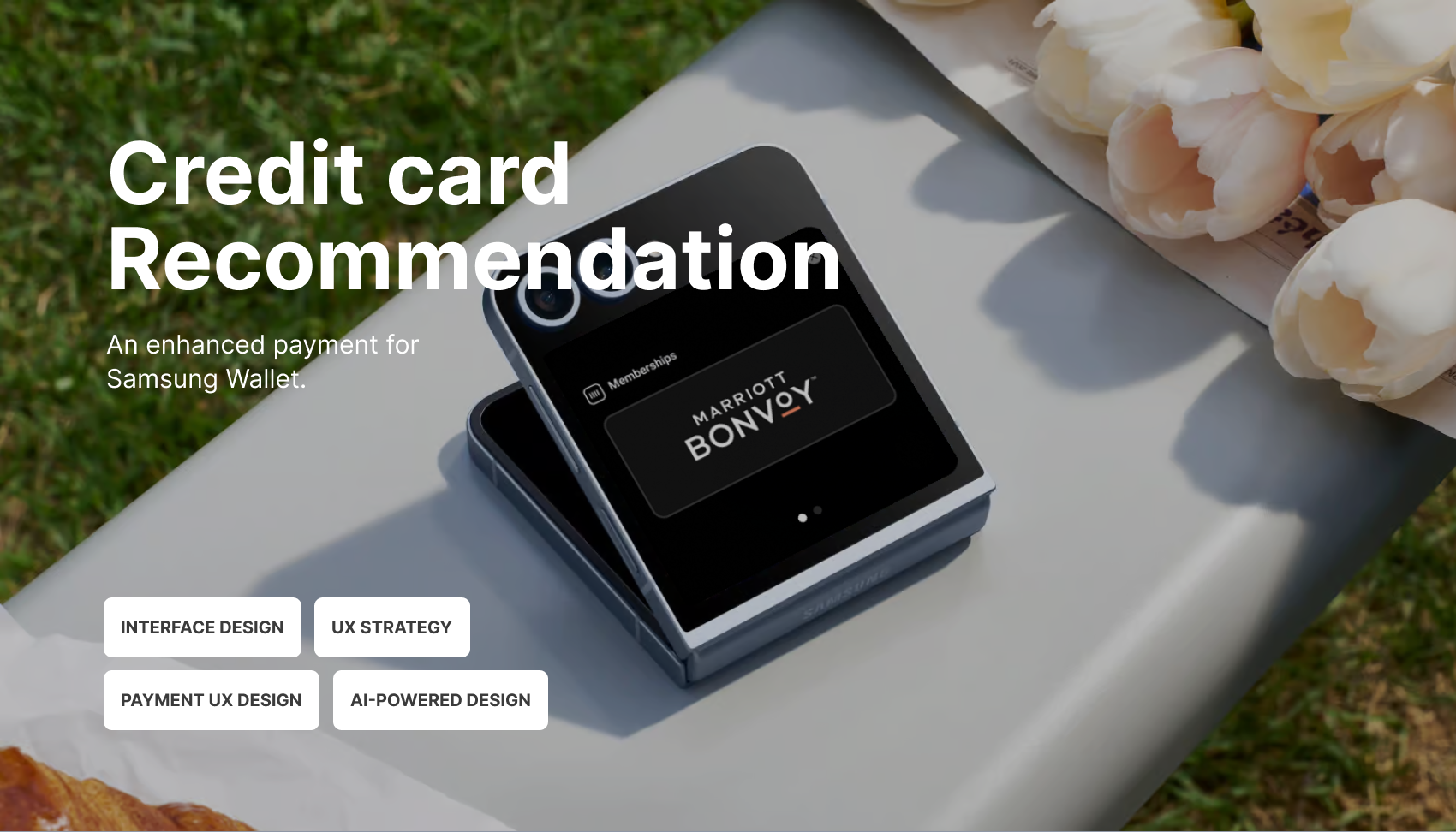
This is a concept project I proposed to Samsung. Digital wallet market is very competitive. Samsung Wallet aims to stand apart from its competitors to win more customers.
My role
I was the only designer on this project and worked with 2 developers. I designed the flow of the solutions along with the interface.
Problem and opportunities
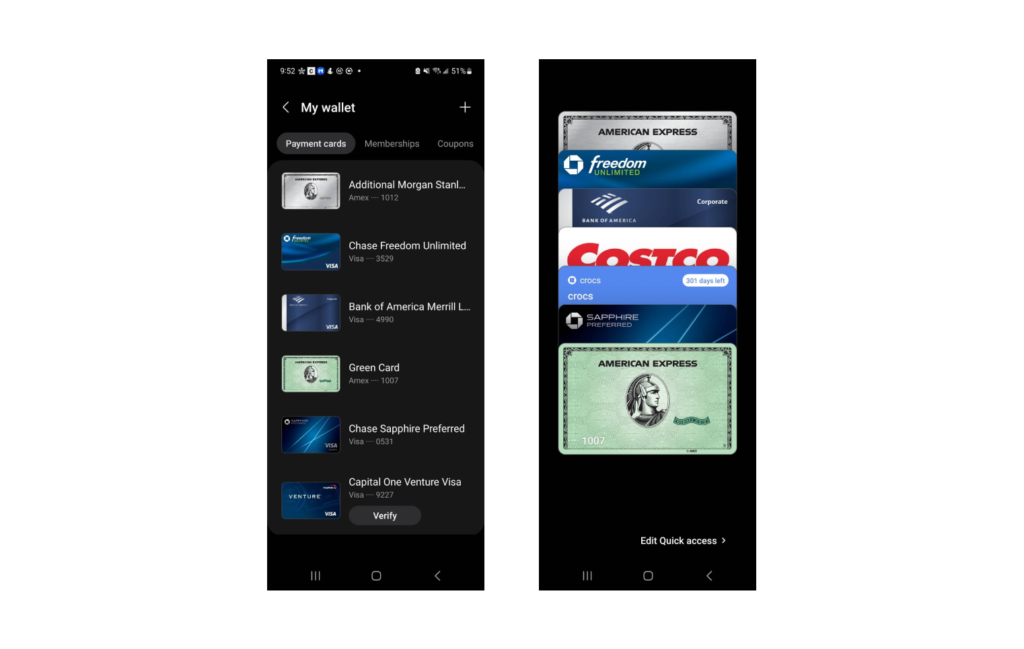
While Samsung Wallet centralizes credit cards, memberships, and coupons, it does not help users decide how to use them effectively. As a result, users struggle to choose the right payment option, overlook membership perks, and forget to apply coupons—leading to missed savings during everyday purchases.
Helping users to develop a payment strategy using their assets, enabling them to maximize benefits in any situation would be a huge opportunity for Samsung Wallet.
Memberships and coupons often overlooked by users

Users stack credit cards, coupons, and memberships to maximize rewards. While Samsung Wallet reminds users of expiring coupons, they often forget to use them at checkout. Users want smarter, timely reminders to help them make the most of available benefits.
Real-time update the benefits

The benefits of coupons, memberships, and credit cards are not static. Coupons typically have expiration dates and may only be valid for a limited time. Also, membership benefits policy may change over time. Similarly, credit cards benefits often vary quarterly or seasonally. Therefore, users want to track the benefits in a realtime fashion.
Credit cards’ reward system is complicated
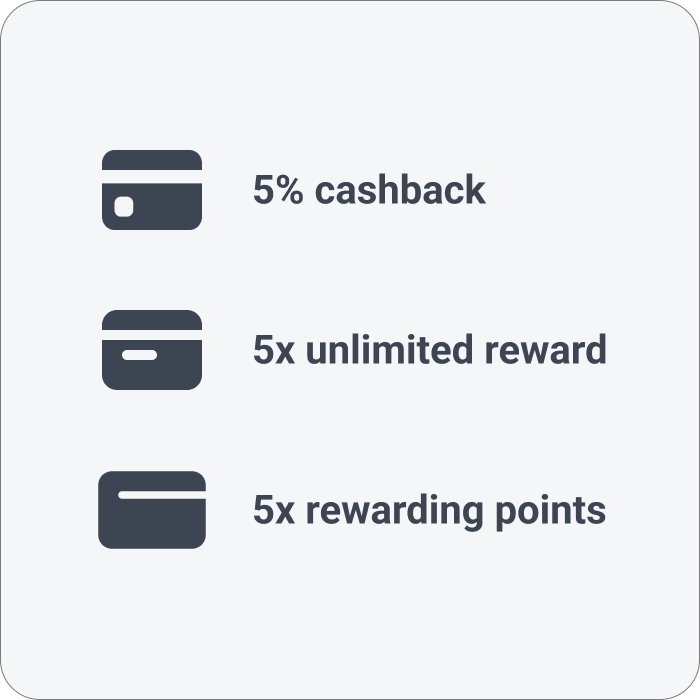
Users often hold multiple credit cards with overlapping rewards. When similar cards offer the same benefits—such as 3% cash back on dining—users must consciously compare options at checkout to maximize rewards.
Show me you know me

Maximizing benefits is very personal and subjective. Some people aim to earn the maximum points or miles through transactions, while others prioritize using cards with perks that offset the annual fee. Additionally, some individuals focus on paying the least amount by utilizing discounts or cash back offers from credit cards.
How might we…
Based on the discovery, 2 how might we questions are formed:
- How might we effectively help users avoid missing out on benefits?
- How might we understand what maximized benefits the user is looking for at various situations?
How does the success look like
Our goal is to develop a personalized payment recommendation system that suggests the optimal combination of credit cards, memberships, and coupons for users, maximizing benefits in different scenarios.
Several metrics can be used to evaluate the system:
- User satisfaction score – Measure user satisfaction with the accuracy and relevance of benefit suggestions.
- Engagement rate – Track how often users interact with the recommendation system and use the recommendations.
- Savings rate – Calculate the amount of money saved by users as a result of following the recommended spending strategy.
Design strategy
Based on user research data, I’ve landed on the below design strategy:
- Comprehensive data collection and real-time updates
the existing Samsung Wallet already has transaction histories. To provide more personalized suggestions, the system needs to collect more data, including credit card rewards, perks, annual fees, user reward redemption records, and membership program information. Also, ensuring real-time updates is essential to accurately reflect the latest data. - Personalized
we can leverage machine learning algorithms to analyze large amounts of data and understand users’ spending patterns and preferences, taking into account contextual factors such as location, time, merchant, and purchase type. - Proactively send recommendation
to let users effectively use some benefits, predict the user’s transaction tendency and push the recommendations to users after analysis can make them feel understood and enhance adoption. - Give user control on the final decision
while leveraging AI to recommend credit cards to users, we still allow them to make the final decision on whether to use the recommendation. We continuously improve the accuracy of our AI recommendations based on the users’ final decisions.
Solutions
Proactive recommendation flow
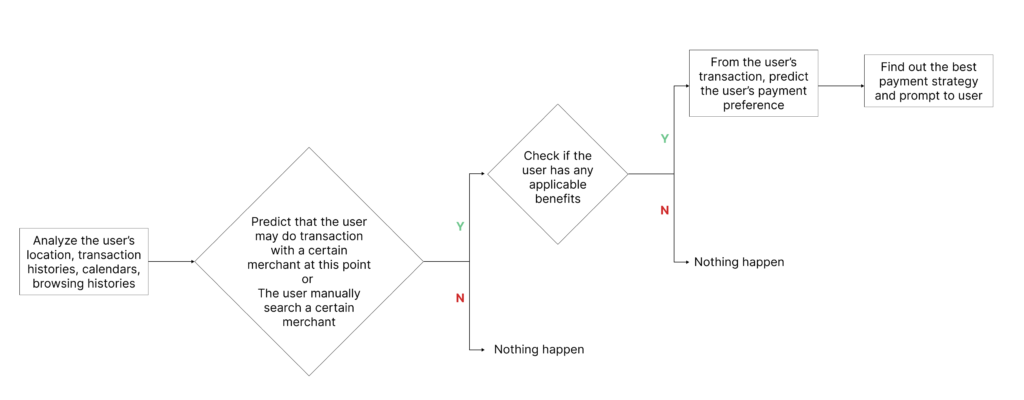
We collect various data, including users’ locations, transaction histories, calendars, and browsing histories. The system then identifies patterns in the data to predict whether a user may transact with a merchant at a given time. Presenting these benefits when users need them can significantly increase their utilization rate.
If a potential transaction is detected, the system checks the user’s credit cards, memberships, and coupons to find any applicable benefits. By analyzing transaction histories, reward redemption records, and calendars, the system understands the user’s spending preferences. Based on these preferences, the system recommends the most valuable combination of benefits.
Benefit comparison flow
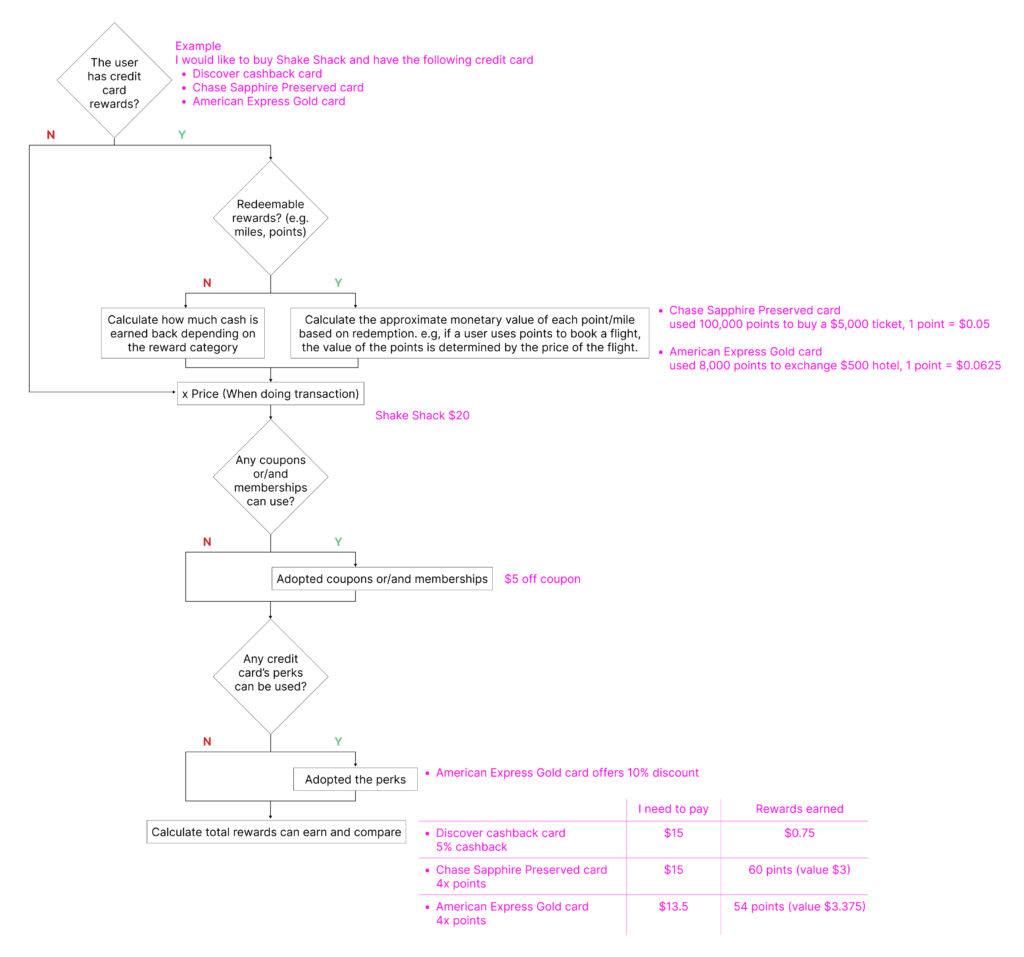
Among the benefits, credit card rewards are the most complex. While cash back is straightforward, the value of points or miles depends on how the user redeems them. Based on the user’s past redemption records, the system can calculate the approximate value of points or miles for the user and compare their value after adopted credit card’s perks, coupon or memberships’ benefits.
Recommend credit cards with applicable coupons and membership benefits
There are two ways to access the system. One is through the system automatically identifying the merchant the user may want to transact with; the other is by the user manually typing in the merchant to see the recommended payment options.
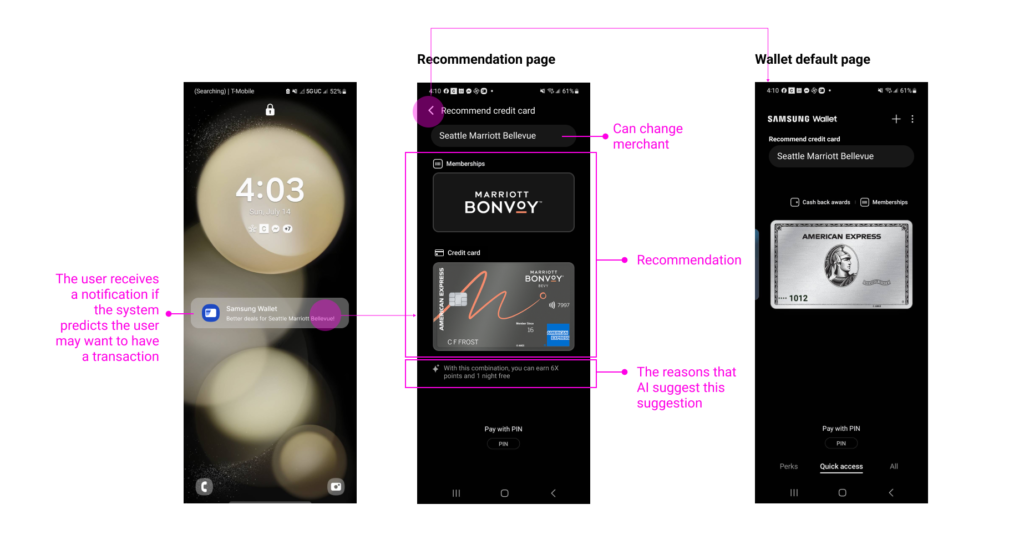
While the process seems complicated, the interface is relatively simple. The user will receive a notification if the system predicts they may want to make a transaction. Once the user taps the notification, they will be redirected to the recommendation page and can directly use the memberships, coupons, and credit cards. To build more trust, we will show users how AI arrives at its decisions. If users are not satisfied with the AI’s recommendations, they can go back and select the card themselves.
Cover screen’s UI