
English summary 英文概要
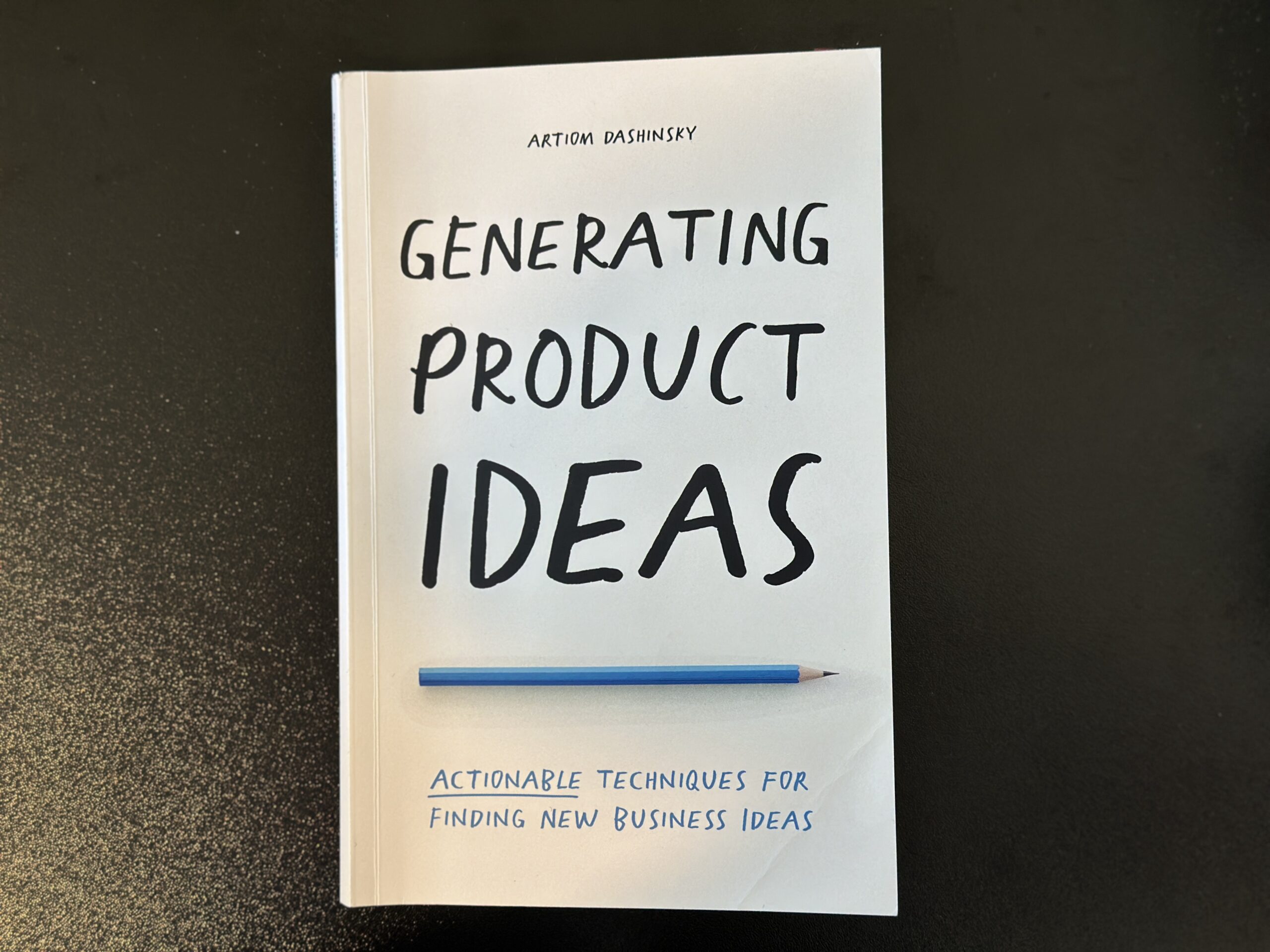
Generating Product Ideas by Artiom Dashinsky is a practical guide to finding and developing valuable product and business ideas.
Rather than focusing on programming, design, or marketing skills, the book explores a question that many entrepreneurs struggle with: how to consistently generate ideas worth building. Dashinsky argues that successful products begin with understanding people and their problems. His core principle is simple: “Problems first, products second.”
One of the book’s key ideas is that entrepreneurs should start with an audience they know well. The best opportunities often come from personal experience or from communities that we deeply understand. When we are familiar with a group’s challenges and frustrations, it becomes easier to identify meaningful problems to solve.
The author also emphasizes that innovation rarely comes from sudden inspiration. Instead, product ideas emerge through continuous observation and documentation. He encourages readers to build a system for collecting problems, user complaints, behavioral observations, and emerging trends. Over time, these observations form a pool of opportunities from which stronger ideas can emerge.
Another important concept is identifying the root problem rather than focusing only on surface-level symptoms. By understanding why a problem exists, entrepreneurs can create solutions that provide greater value to users.
Finally, the book highlights that many successful products are not entirely new inventions. Instead, they often combine existing business models with new audiences, technologies, or use cases. Innovation frequently comes from recombining proven ideas in new ways rather than creating something completely original.
What this book is about 這本書是關於什麼
《Generating Product Ideas》由 Artiom Dashinsky 所著,內容圍繞著一個創業者或產品人經常面對的問題:如何持續產生值得投入的產品構想(Product Ideas)。
作者認為,大多數人會花時間學習程式設計、產品設計或行銷,但很少有人真正學習如何發現有價值的問題,以及如何從問題中找到商業機會。
書中以「人群(Audience)」作為出發點,並強調「先思考問題,再談產品(Problems first, products second)」。這個觀念其實和許多創業相關書籍,例如《一人創業》或《Perennial Seller 滾動內容複利》所提倡的方向一致:產品本身不是重點,重點是你在為什麼人解決什麼問題。
整本書與其說是在教人發想點子,不如說是在建立一套持續發現問題、驗證問題,並將問題轉化為產品構想的方法。
Key ideas & reflections 摘要與觀點
決定對象
要如何找到自己想服務的人群(Audience)?
有些書會建議從熱情出發,但作者認為,從自身經驗切入往往更容易。換句話說,你最好本身就是這個族群的一員,或是身邊有非常熟悉的人屬於這個族群。因為只有真正理解他們的需求與痛點,才能找到有價值的問題。
例如,Dylan Field 具有產品設計與網站開發背景。由於長期處於設計與開發協作的環境中,他深刻體會到設計檔案交付與團隊協作的低效率,因此萌生打造更順暢協作工具的想法。這個想法後來發展成 Figma,並改變了許多團隊的工作方式。
不過,我認為從熱情出發和從自身經驗出發,其實很多時候是重疊的。如果一件事情能讓你長期投入、持續關注,那麼你大概率本來就是這個族群的一員。以我自己來說,我很喜歡獨自旅行,因此也更容易觀察到自由行旅客,尤其是女性獨旅者,經常遇到哪些問題與不安。這些經驗比起單純做市場研究,往往更真實、更具洞察力。
學會發現問題
作者反覆強調,不要憑空追求創意,而是要從問題出發。許多人在思考創業時,習慣問自己:
「我可以做什麼產品?」
但作者認為更好的問題是:
「有哪些問題值得被解決?」
即使生活已經比過去方便許多,我們每天仍然會遇到大量摩擦與不便,只是許多問題因為習慣了而被忽略。除了觀察自己的生活之外,也可以透過搜尋關鍵字、閱讀社群討論、分析產品評論等方式,發現大家共同面臨的問題。這讓我想到,很多人以為產品創新來自天才般的靈光一閃,但實際上,更多時候是來自對問題長時間的觀察與累積。
不要期待靈光一閃
書中提到一個我很認同的觀點:好的產品構想通常不是突然出現的,而是長期累積的結果。
作者建議建立一套持續收集想法的系統,例如:
- 記錄生活中的問題
- 記錄觀察到的行為
- 記錄使用者抱怨
- 記錄新興趨勢
如此一來,點子就會像投資組合一樣慢慢累積。這部分讓我聯想到寫作。
很多人認為寫作時需要等待靈感,但實際上,長期記錄與觀察的人,往往比較容易產生新的想法。產品構想也是如此,當累積的素材夠多,新的連結自然會出現。
很多時候我們看到的是表面問題,但真正需要解決的問題其實藏得更深。例如使用者抱怨某個功能難用,真正的問題可能不是介面設計,而是整個流程過於複雜。如果能持續追問問題背後的原因,就更有機會找到具有價值的產品機會。
結合既有的商業模式
書中最後一個讓我印象深刻的部分,是作者認為許多成功產品並不是全新的發明,而是既有商業模式的新組合。
像Netflix就是組合訂閱制,Costco組合會員制,Booking.com組合佣金等等,真正的創新,很多時候不是創造前所未有的東西,而是把既有模式應用到新的情境中。因為當我們談產品創新時,很容易把創新想像成革命性的發明,但現實世界裡,大多數成功產品更像是重新組合(recombination)。
新的使用者需求、新的技術,以及既有商業模式,三者組合在一起,就可能產生新的機會。
Leave a Reply